

Inverter power parallel technology is crucial in power systems. Here are several key strategies:
1. Centralized control parallel solution
This solution appeared earlier. The parallel control module detects the frequency and phase of the mains power and sends synchronization signals to each inverter. When the mains power fails, the phase-locked loop circuit ensures that the inverter output voltage frequency and phase are consistent. The module also detects the load current to determine the current reference instruction of each inverter, and eliminates the circulating current by detecting the output current and compensating the reference voltage instruction. Its advantages are simple implementation and good current sharing effect, but there is a problem of low reliability. Once the parallel controller fails, the entire system will be paralyzed.
2. Master-slave control parallel solution
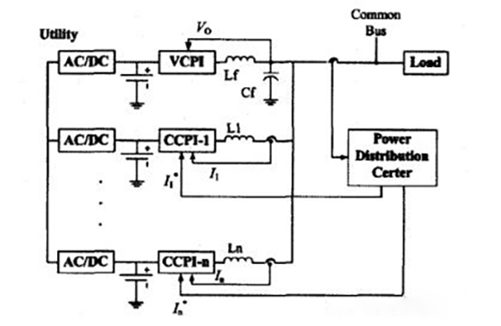
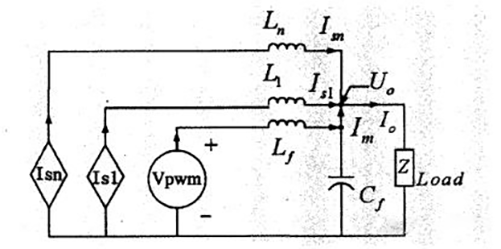
Derived from the centralized control solution, it can realize switching between master and slave modules, avoiding the problem of controller failure causing system crash in centralized control mode. It consists of a VCPI unit, multiple CCPI units and a PDC unit. The VCPI unit synchronizes its output voltage with the mains or reference voltage signal through a phase-locked loop; the CCPI module automatically follows the VCPI module; the PDC unit detects and distributes the load current. Advantages include simple control, good system stability and control accuracy, good dynamic performance, strong current sharing capability, and easy power control and distribution. The disadvantage is that the system modules are not equal in status, and instantaneous circulation is easily generated when the master and slave modules are switched, which poses a risk of system collapse.
3. Distributed control parallel scheme
This is a true redundant control method. The addition and exit of modules does not affect the operation of the system. It covers the average current instantaneous control scheme and the active and reactive power control scheme.
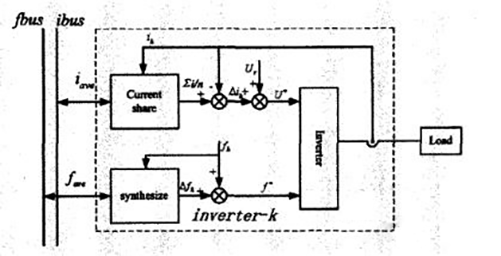
Average current instantaneous control scheme: The reference voltage of each module is synchronized through a phase-locked loop circuit, and the instantaneous average value of the output current of each module is calculated for adjustment, and the interconnection line needs to be controlled. Its characteristics are that there are two parallel control lines, the status of each module is consistent, the dynamic response is fast, and the current sharing characteristics are good, but the analog communication signal is susceptible to interference and EMI problems, and the reference voltage deviation has a great impact on the system.
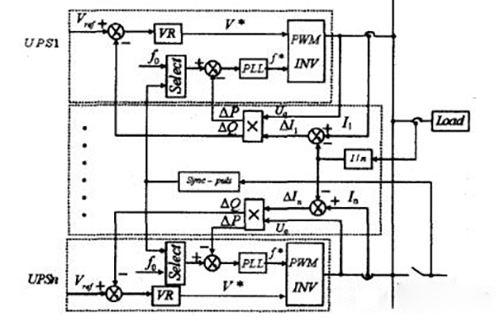
Active and reactive control scheme: By detecting the active and reactive information of the machine, communicating with other modules through the parallel line, and adjusting the output voltage frequency and amplitude after comparison. With three parallel control lines, each module has equal status and strong anti-interference ability, but the dynamic response is poor and the calculation is large.
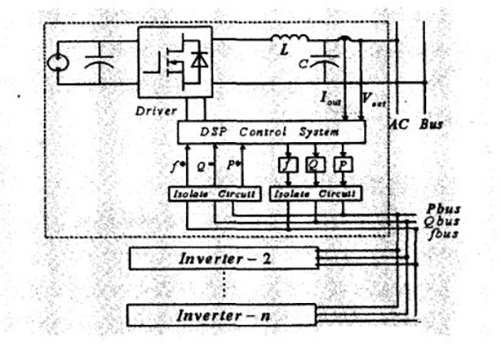
IV. 3 C control parallel scheme
Using a ring signal connection, the inverter output current feedback signal is added to the next inverter control loop in turn to form a parallel relationship. This is an improvement on the distributed control method, with fewer interconnection lines, less interference, and easy to achieve multiple parallel connections, but the controller design is complex, and conventional control schemes are difficult to ensure reliable operation of the system, and H∞ theory control methods are required.
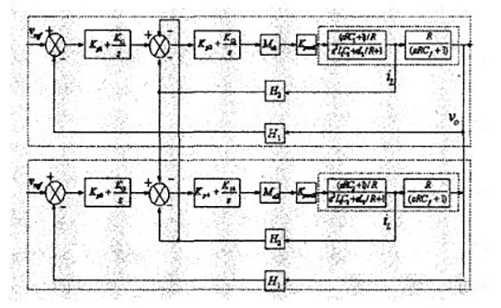
V. Wireless parallel control scheme
It is a hot topic in inverter parallel research. Based on the droop characteristics, the inverter output voltage frequency and amplitude are stabilized with the output power through weight control to achieve wireless parallel connection. Its characteristics include true wireless parallel connection, softened output characteristics, limited dynamic response, and difficult parameter selection. The traditional solution has the defects of large steady-state error of output voltage and slow transient response. The use of power line carrier communication can partially overcome these defects, but it is affected by the high-frequency interference of the inverter switch tube and has error code problems. The common-mode current frequency modulation method can avoid switching frequency interference and filter signal attenuation, but the information is highly dependent on the output impedance parameters of the inverter main circuit.
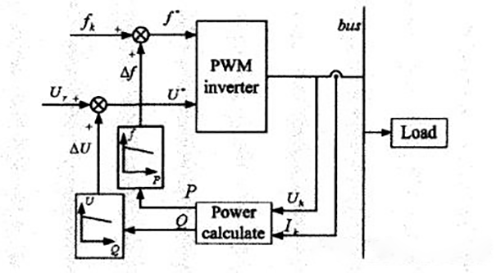
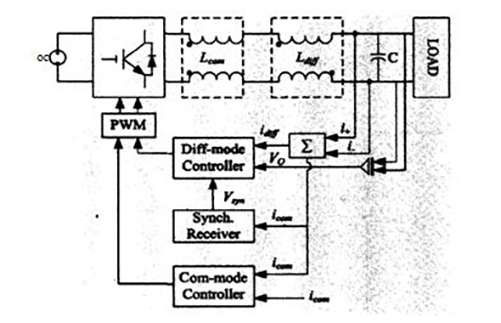
In summary, the parallel operation of inverter power supplies can improve system reliability and maintainability and meet the needs of capacity expansion. This article introduces a variety of control strategies and analyzes their advantages and disadvantages, hoping to provide a reference for industry development.